







Victor Jara: The Guitar They Couldn’t Silence, Eternal Symbol of Latin American Struggle
September 18, 2025 Hour: 12:41 pm
🔗 Comparte este artículo
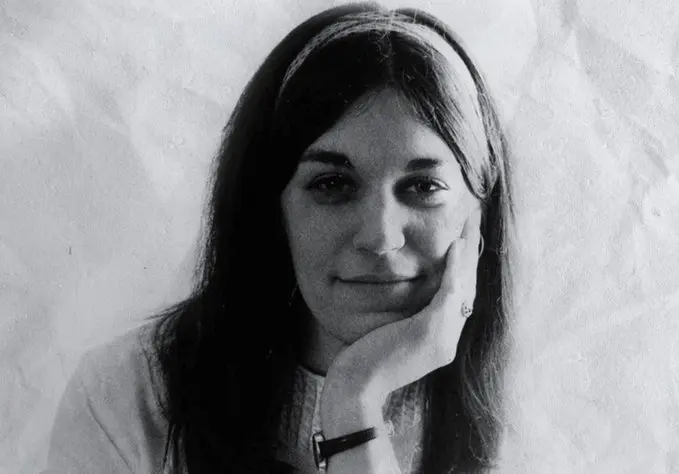
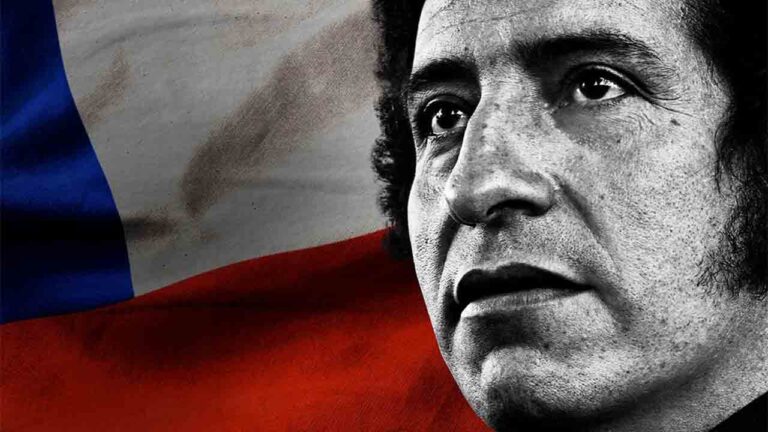
Victor Jara was not just a singer-songwriter. He was a complete artist, an innovative theater director, a poet of the everyday, and a tireless activist.
His figure transcends the tragedy of his assassination to become an eternal symbol of resistance and hope. In the Chile of the Unidad Popular, his voice accompanied the dream of a more just society.
His death at the hands of Augusto Pinochet’s dictatorship elevated him to a martyr for the peoples of Latin America, immortalized in songs, on the streets, and in collective memory.
In the month of his death, we bring you this article where we delve into the details of Victor Jara’s life, his political convictions, the indelible mark of his work, and how his murder turned him into one of the most transcendent figures in the cultural and political history of the continent.
The Humble Origins of Victor Jara
Victor Lidio Jara Martínez was born on September 28, 1932, in the agricultural village of Lonquén, in the central region of Chile.
He grew up in a peasant family marked by the violence of his alcoholic father. From a young age, he witnessed the abuse against his mother, Amanda Martínez, whose strength and passion for music would be a beacon in his childhood.
Amanda instilled in him a love for the guitar and the certainty that education was the way to build a dignified future.
In the 1940s, the family moved to Santiago, where Victor began singing in his parish choir, experiencing for the first time the transformative power of music.
He even entered the seminary, where he learned Gregorian chant, although he soon discovered that his true path was in art and society.
After completing his military service, he joined the choir of the University of Chile and began to research national folklore, collecting popular songs and traditions that would become the root of his musical and poetic work.
The harshness of rural life deeply marked his perspective: Victor Jara never forgot the social inequalities that surrounded him since childhood.
Theater as a Tool for Transformation
Before he was recognized as a singer-songwriter, Jara excelled in theater. His interest in this discipline was no coincidence: he saw the stage as a political space, a vehicle for social transformation.
In 1960, he graduated as a theater director from the University of Chile and soon joined the Theater Institute, where he directed various plays and received the Laurel de Oro Award for best director of the year.
In the mid-decade, a popular song of his, with a comical and critical tone toward hypocritical religiosity, caused a national scandal.
That sealed his reputation as a rebellious artist, willing to challenge power. With one foot in theater and the other in music, Jara began to forge the path that would lead him to become a major figure in Latin American culture.
The New Chilean Song: Music for a People in Struggle
In the 1960s, Victor Jara joined the Nueva Canción Chilena movement, a cultural phenomenon that united musicians like Violeta Parra, Quilapayún, and Inti-Illimani.
It was a movement that reclaimed Latin American folkloric roots and put them at the service of the social and political struggles of the time.
Victor Jara stood out not only for his interpretive talent but also for his ability to transform poetry into songs of protest and hope.
“Te recuerdo Amanda” (“I Remember Amanda”), a moving tribute to the dignity of the working class, or “El derecho de vivir en paz” (“The Right to Live in Peace”), an anthem against the Vietnam War, are examples of how his work transcended borders.
For Jara, music was not entertainment: it was a weapon of consciousness. With every chord, he sought to awaken his people and sow the seeds of solidarity and social justice.
Victor Jara’s Political Commitment
In 1969, he released his second album, Pongo en tus manos abiertas (“I Put in Your Open Hands”), a work with which he consolidated his profile as a committed artist.
That same year, he actively joined Salvador Allende’s presidential campaign, supporting the Unidad Popular as a militant of the Communist Youth. Far from opportunism, his commitment was deep and unwavering.
During Allende’s government, Victor Jara was named a cultural ambassador. He traveled throughout Chile with his guitar, bringing the voice of the people to political rallies and community events. He also traveled frequently to the Soviet Union and Cuba, strengthening the international cultural ties of the Unidad Popular.
Although he knew of the growing danger, he never renounced his ideals. He understood that being an artist in that context meant taking a stand, and he assumed the risk with courage: his song was, in his own words, “the cry of those who have no voice.”
The Coup d’État and the Assassination of Victor Jara
On September 11, 1973, Chile awoke to the military coup against the democratically elected government of Salvador Allende.
That same day, from his home, Víctor heard Allende’s final speech from La Moneda Palace. Determined not to give up, he took his guitar and went to the Technical University of the State, where students and colleagues had gathered to resist.
The next day, the campus was surrounded by military forces, and everyone was taken to the Estadio Chile, which had been converted into a mass detention center.
There, Victor Jara was recognized, isolated, and brutally tortured. He was beaten mercilessly, his hands were destroyed, and he was forced to pretend to play the guitar.
Despite the torment, he wrote his last words on a piece of paper that he managed to pass to other prisoners: a poetic testimony turned into a song of resistance.
On September 16, his bullet-riddled body was found abandoned in Santiago, identified by his wife, Joan Jara. He had received more than 40 shots. He was buried almost in secret at the General Cemetery of Santiago.
Delayed Justice and Living Memory
Decades later, in 2009, Víctor Jara’s body was exhumed as part of the judicial investigation into his murder.
That year, a public, massive funeral filled with songs was held in an act of collective redress. Since then, he rests in a tomb with his name on it, visited daily by people who keep his memory alive.
Chilean justice has advanced slowly. Several military officials responsible were prosecuted, including Edwin Dimter Bianchi, known as “El Príncipe,” identified as one of his main torturers.
Although the delay in solving the crime reflects the impunity of the dictatorships, it also shows the persistence of memory and the demand for truth and reparation.
The Cultural and Political Legacy of Víctor Jara
Today, more than five decades after his assassination, Victor Jara is still present in every protest, in every slogan chanted in Latin America and the world. His figure is a universal emblem of resistance and humanity.
The former Estadio Chile, where he was tortured and murdered, now bears his name: Estadio Victor Jara.
Named a National Monument in 2009, the space functions as a site of memory and also as a cultural and sports venue. Its mission is to keep history alive, promoting human rights and reaffirming democratic values.
Jara’s legacy reminds us that art is a tool for fighting injustice. His songs demonstrate that poetry and music can be powerful weapons against tyranny, and his life exemplifies how coherence, courage, and political conviction light the way for new social movements.
Victor Jara, a Song That Resists
Victor Jara left us much more than songs. He left us an example: that of an artist who never betrayed his people or his own voice.
His song was part of a struggle for human dignity, and although they tried to silence him, his music continues to resonate loudly in the present.
Every time a people rises up against oppression, every march that demands justice, every guitar that strums his melodies in plazas and parks, Victor Jara is revived. His voice, violently silenced in 1973, became an eternal echo of memory, struggle, and hope.
Author: Silvana Solano
Source: TeleSur